
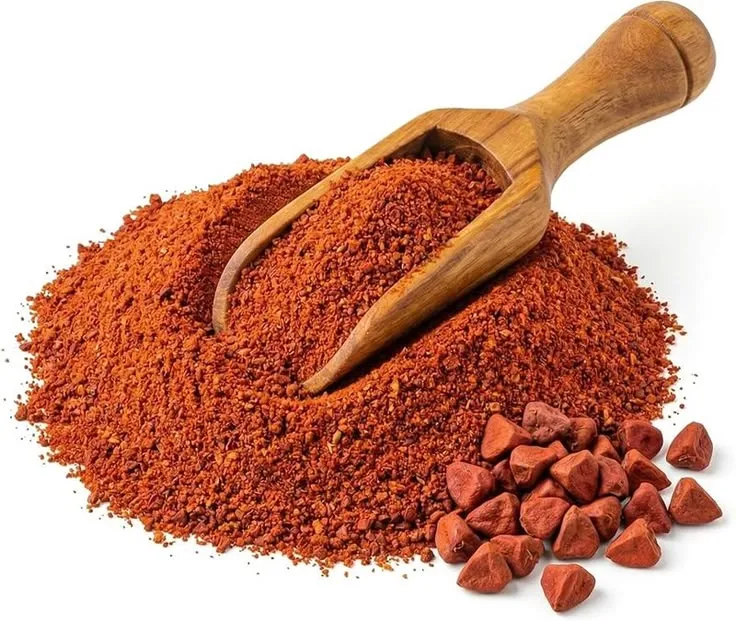
Looking for plants that can produce attractive colors, food manufacturers will look at plant-based ingredients. Annatto is particularly useful for making warm shades that can complement an assortment of foods. Annatto Powder is a convenient ingredient for some commercial applications and also provides natural pigments with yellow, orange and related colors. The knowledge of how this ingredient can be incorporated into various formulations may aid the product developer in making a practical selection during the coloring procedure.
Understanding the Natural Source
The seeds of the achiote plant are used to make annatto, which is characterized by the warm coloration it gives to food. Annatto is a good choice for food manufacturers seeking to create naturally colored foods due to these pigments.
Final color may vary with variation in the preparation of the ingredients, their concentration, formulation and processing environment. Therefore, it is important to take into account the entire food system when assessing the use of an annatto ingredient as a developer rather than just considering it as an ingredient on its own.
Where Annatto Can Be Used
Annatto food coloring can be used in a number of food categories that lend themselves to a yellow, golden or orange color. Applications may range from dairy products, sauces, snacks, baked goods, confections to specific beverage formulations.
The color will vary from one product to the next and will be specified by the desired color. Depending on the effect desired, one formulation might work best with a soft orange effect, and another might need a stronger orange hue. The approach can be varied depending on the concept of the product and the desired visual effect.
Using application testing throughout the process can also be helpful, as the surrounding ingredients can affect the final color.
Choosing the Right Color Intensity
A commercial product needs to be developed taking color intensity into consideration. Businesses may desire a gentle hue that matches the food’s natural color or a more striking color that will offer the food a special visual identity.
The correct amount is dependent on the specific ingredient, food matrix and desired product. Product developers can use small-scale trials to evaluate various concentrations and choose the one they like best.
Testing also provides an opportunity for teams to observe the color after mixing, processing and storage. This “how to” information may help with uniformity when a product is ready for larger production scale.
Consider the Product’s Processing Conditions
Each food product is produced in a different manufacturing environment. When assessing a natural color ingredient, it is important to consider its exposure to heat, acidity, storage, mixing or exposure to light.
For instance, if we’re talking about a baked product, it might involve a lot of heat during production, but if we’re talking about a chilled or liquid product, it may be very different. During testing, developers can duplicate specific phases of the process to learn about the selected color’s performance. This will allow one to find an appropriate application technique and realistic production variables.
Powder Format and Production Handling
A powdered ingredient can easily be incorporated into processes that are already dry. It can be used in limited blend/mix/or formulation based on the production method and dispersion required.
Mixing equipment, order of ingredients, how ingredients are measured and the uniformity and consistency of the formulation should be taken into consideration by manufacturers. However, technical assistance may be useful in determining the way in which a powdered color should be used in a specific product.
A sample assessment can also enable teams to decide if the selected format will be a good fit for their current production workflow.
Developing Consistent Product Appearance
If a suitable annatto ingredient and application method is found, then the manufacturers can record the following important formulation information. This could involve the amount to be used, the method of mixing, processing conditions and the intended shade.
When making product variations, it is important to have clear specifications to keep that product’s appearance consistent between batches. They can also be beneficial if the same color strategy is being used for other products.
Conclusion
Annatto can give food developers a versatile way to explore warm, naturally derived shades across different commercial applications. Careful attention to color intensity, product formulation, processing conditions, and powder handling can help create a consistent and appealing result. If you are developing a food product that could benefit from annatto-based coloring, visit foodrgb.com to explore suitable natural color options and move your formulation ideas toward practical production.
About the Author


